Battery energy storage
Battery energy storage systems can help balance supply and demand, manage intermittency, and support a power system with a growing share of renewable generation.

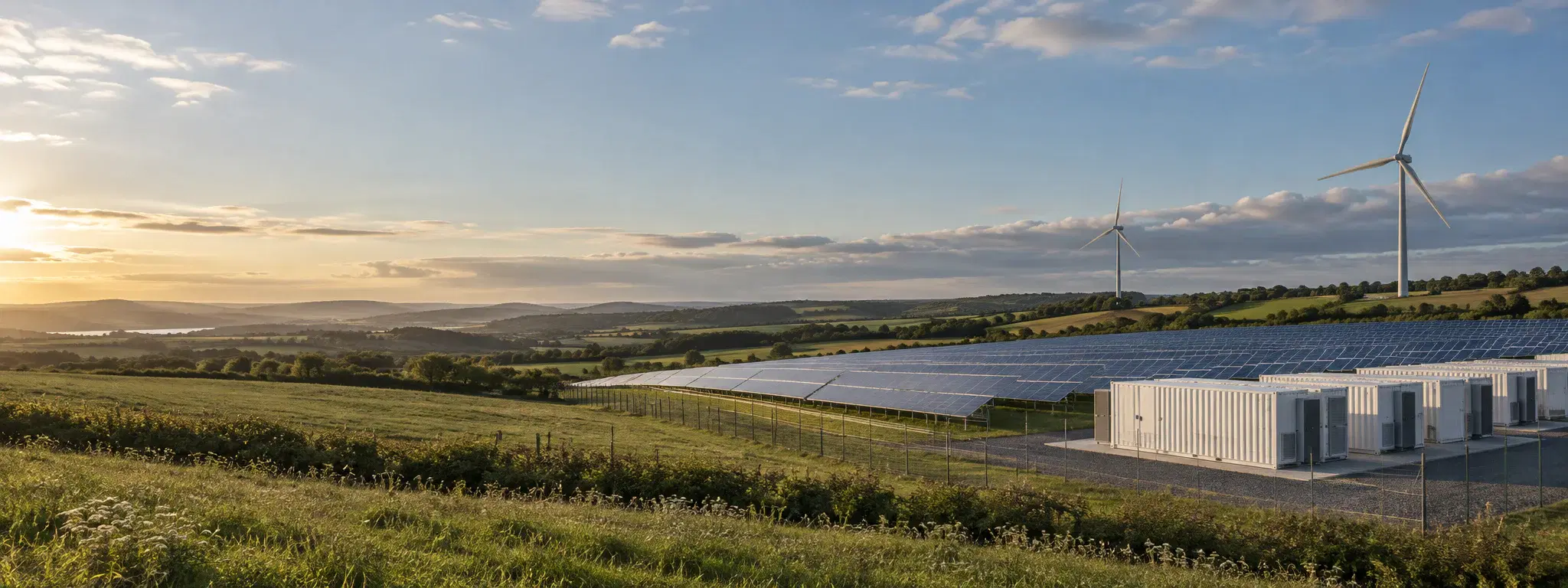
CENS explores tangible opportunities in battery energy storage, solar, wind, and co-located renewable generation.
Renewable generation and storage are physical assets within a complex energy market. We are interested in the technologies, sites, and commercial structures that can support the transition while meeting a clear economic need.
That means looking beyond the headline technology to grid access, planning, construction, operations, revenue arrangements, counterparties, and the risks that determine whether an individual project is investable.
Battery energy storage systems can help balance supply and demand, manage intermittency, and support a power system with a growing share of renewable generation.
Combining storage with solar or wind can create operational flexibility and make better use of a shared grid connection, subject to project design and market conditions.
Ground- and roof-mounted solar are established renewable technologies. Each opportunity depends on location, planning, grid access, construction, and route to market.
Project quality depends on the wind regime, planning position, grid connection, delivery costs, operations, and the commercial arrangements supporting the asset.
New-energy assets may offer environmental benefits, physical asset backing, and long-duration cash-flow potential. They also carry material development, construction, technology, market, grid, operational, regulatory, and liquidity risks.
Capital is at risk, income is not guaranteed, and past performance is not a reliable indicator of future results. This page is general information only and does not constitute an offer, recommendation, or investment advice.